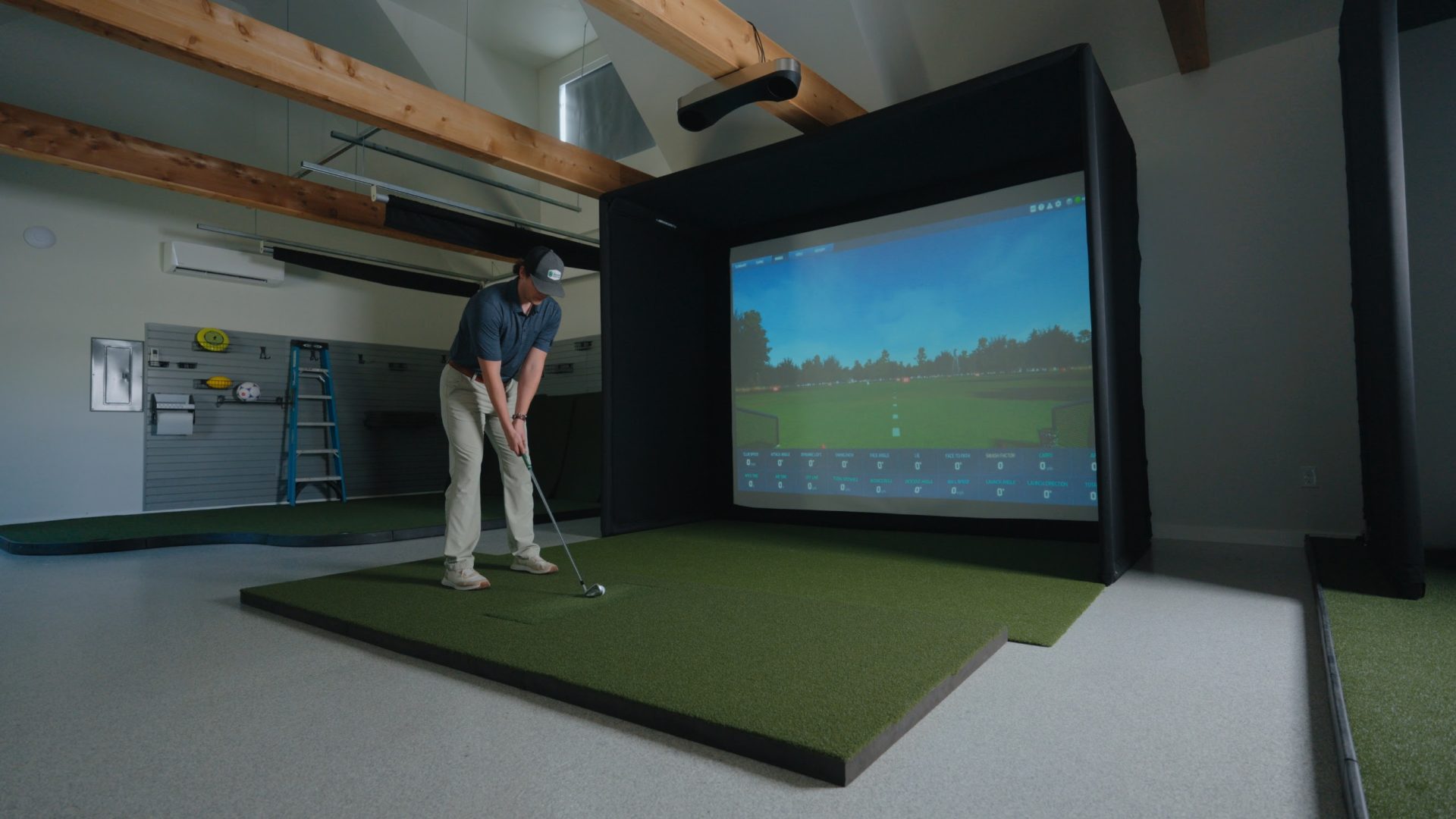
Jon Sherman, who is the founder of the game-improvement-focused Pract
“A lot of content I’ve done on the game improvement side is to help people evaluate launch monitors, and how to practice with them,” Sherman said. “I hate people wasting money on this stuff without knowing what they’re getting into.”
Fortunately, golfers can find more affordable choices than ever before. Not long ago, you couldn’t get a decent home setup for less than $10,000, but now not only is that not true, but there are good launch monitors out there that cost even less than $1,000.
Meanwhile, it’s never been easier to do it yourself, both in terms of budget and simplicity. The Indoor Golf Shop offers everything from professional installation to do-it-yourself kits that are simple to set up.
“I think the DIY budget thing has been mostly solved,” Sherman said. “If you have a modest budget but want to have quality practice at home, you can get a net, an enclosure, hitting mats, and get everything done for less money than ever. For me, it’s about making sure people know what they’re getting into with the technology, like the launch monitors they’re using.”

For example, he lines out the importance of space needed for different launch monitors like a camera based unit versus a doppler radar unit.
“So just understanding the limitations of radar, I believe cameras are superior for indoor setups,” Sherman said. “I have used SkyTrak for years in a very limited space and it was perfect. I think that’s why companies like The Indoor Golf Shop are great because you can call them up, and they’ll tell you, ‘Oh yeah, don’t buy that one because that’s going to be a disaster in a small garage space.’”
Another great indoor option might be the Rapsodo MLM2PRO, which can be purchased for around $700. “I think the software’s incredible. And I would say their software is one of the best for the price point. And you can also integrate with GSPro.”
What he means is that if you add GSPro software, which is an add-on subscription to capable monitors, you’re bringing in hundreds of golf courses you can play in addition to all the practice modes, and perhaps, more importantly, the games designed to improve various parts of your game (like short-game practice).
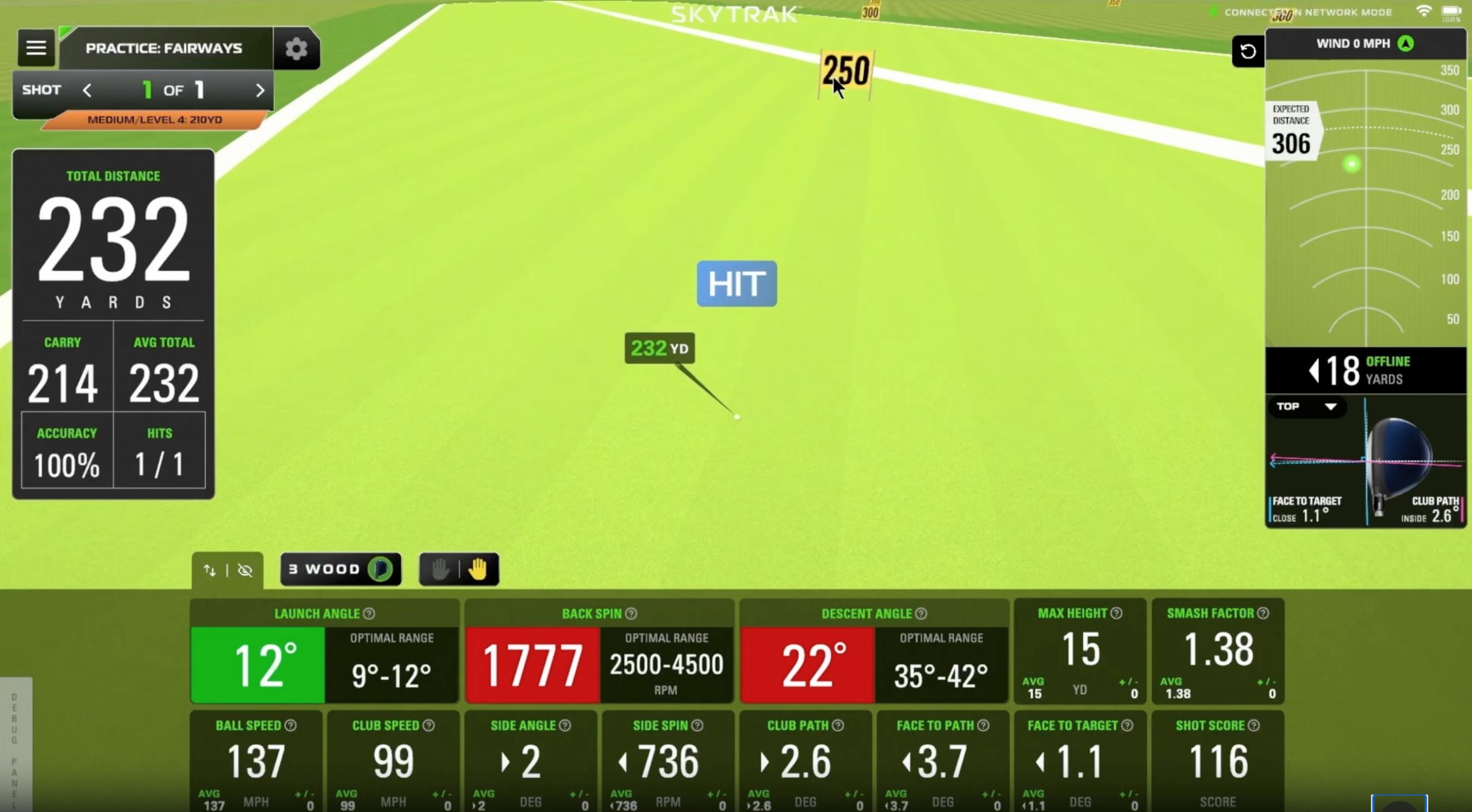
A decade ago, Sherman said, golfers might buy a net and a mat and only had a couple of hardware options. Now, there are more-than-ample choices in enclosures, screens, projectors, and mats.
One of the biggest mistakes Sherman sees people make, however, is that they don’t take into consideration what kind of computer they need to run the simulator/launch monitor software they are purchasing.
“Some people will buy all this stuff and realize that they might have needed a $1,500 gaming laptop or computer to run GSPro software,” he said.
For example, a consumer buys a Foresight setup, a 4K projector, and GSPro. “That can gobble up a lot of memory,” he says. “The last thing you want is glitchy software, so definitely invest in a computer that can handle your needs.”

Of course, if you’re looking to build your own sim space, quality soft goods available are essential, and The Indoor Golf Shop is one of the leading suppliers of screens, hitting surfaces, enclosures, padding and necessary accessories.
“You don’t have to be MacGyver anymore to build these things out,” Sherman said. “The enclosures are built in different packages for sizes and budgets. In addition, the hitting mats have come a really long way. Before you just had that one option that was basically the traditional driving range mat. Now they have the hitting strips, so those are modular. They can be taken out so you don’t have to replace the whole thing. They’ve done a really good job of getting more forgiveness and dig into the mats. I’ve had elbow issues, which is a very common issue for sim users. The new mats accommodate a more realistic hitting experience and for injury prevention.”
So, what’s on the horizon for simulators and launch monitors?
“I’d like to see more interesting practice stuff – because I’m on the game improvement side. More like combines and games and drills. SkyTrak does a great job of that now because they have GOLFTEC behind them,” Sherman said. “I’d like to see advancements on the software, making it more fun and engaging with features like practice challenges.”
Longterm, Sherman looks forward to the sim experience becoming more and more realistic, especially when it comes to short game shots and situations, along with advancements on the long-game side.
“Can you get those uneven lies? Can you get the rough more accurate? Can you do a bunker? Sherman asks. “I think we are heading toward that.”
One final observation is that not only are there more people beginning simulators into their homes, but there are more and more commercial simulator experiences for golfers.
“It’s not always the easiest business model to run, but some of the leaders in this space have figured it out exceptionally well,” Sherman said. “And I think there’s just a desire to have destinations like this all across the country. You’ve got 70 percent, or so, of golfers who have an offseason, and you’ve got more and more people interested in golf than ever because of Covid. And you’re going to have a ton of golfers interested in playing in the offseason and keeping their games fresh because they’re obsessed with golf. I don’t see indoor golf slowing down at all.”
I think it’s going to keep on growing because there’s more options, there’s more budget levels, and now there’s more golfers who want it.”